Many parents struggle to tell a good chess coach from a mediocre one, ratings and titles alone don’t tell you if a coach can actually connect with your child. The right chess coach for your child is someone who matches strong playing ability with real teaching skill, patience, and a clear plan for progress. A good coach does more than explain moves. They build confidence, sharpen decision making, and keep lessons enjoyable so your child actually wants to keep learning. The best way to choose one is to look past titles and price, and focus on teaching style, structure, and how the coach communicates with your child.
Why Choosing the Right Chess Coach Matters
Not every coach teaches the same way, even if two coaches have similar ratings or titles. One coach might explain ideas through stories and patterns. Another might lean heavily on memorized theory. The difference in approach can shape how quickly and how happily your child learns.
A coach shapes far more than opening moves. They influence how a child thinks under pressure, how they recover from a loss, and whether they see mistakes as something to learn from or something to fear.
Over time, this adds up. Children who learn from a coach who explains the “why” behind each move tend to build stronger habits than those who only memorize sequences. Good coaching plants the seeds for long term improvement, not just short term results.
What Makes a Great Chess Coach?
A strong chess coach usually brings a mix of the following:
Playing strength. A coach should understand the game deeply enough to explain ideas at every level, from beginner tactics to advanced strategy.
Coaching experience. Playing well and teaching well are different skills. Experience working with kids specifically matters a lot.
Communication skills. A great coach can explain a complicated idea, like a pawn structure weakness, in a way a seven year old understands.
Patience. Kids repeat mistakes. A good coach corrects gently and consistently, without frustration.
Structured lesson plans. Lessons should build on each other, not feel random from week to week.
Ability to teach different skill levels. A coach who only knows how to work with advanced players may struggle with true beginners, and vice versa.
Tournament preparation experience. If your child wants to compete, the coach should know how to prepare students for real tournament pressure, not just casual play.
None of these traits alone make a great coach. It is the combination that matters.
Should You Choose Private Lessons or Group Classes?
This is one of the most common questions parents ask. The answer depends on your child’s personality, goals, and budget.
Private lessons give full attention to one student. The coach can move at your child’s pace, focus on specific weaknesses, and adjust the plan as needed. This works well for kids who want faster progress or are preparing for tournaments.
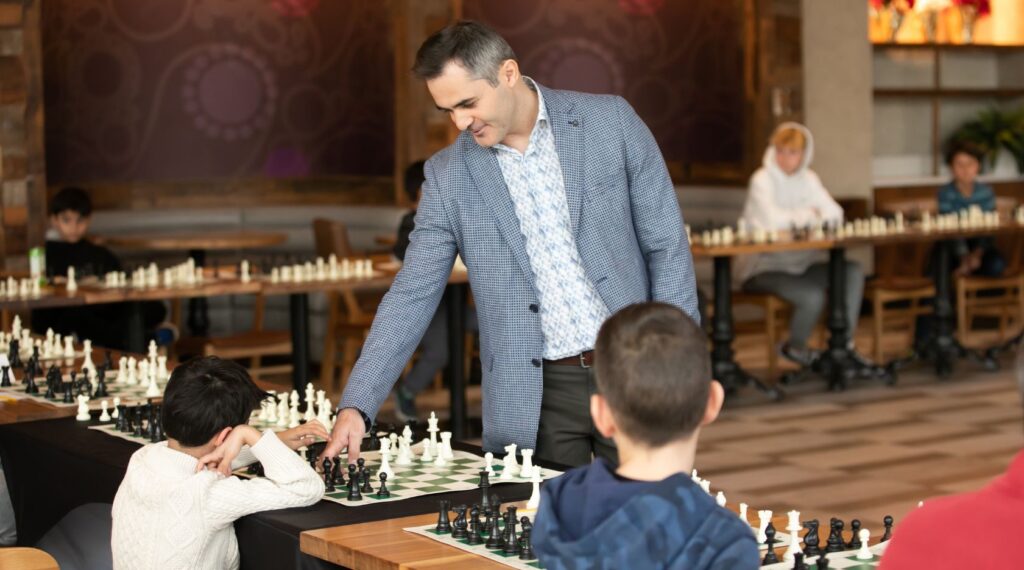
Group classes offer a social learning environment. Kids see how other students think, which can spark new ideas. Group settings also tend to be more affordable and can help shy children build confidence around peers.
Online coaching removes location as a barrier. Your child can work with an experienced coach regardless of where you live, and lessons can happen from home.
In-person coaching offers face to face interaction, which some children find more engaging, especially younger kids who benefit from physical presence and direct board demonstrations.
| Format | Best For | Advantages | Disadvantages |
|---|---|---|---|
| Private Lessons | Kids with specific goals or tournament plans | Personalized pace, focused feedback | Higher cost |
| Group Classes | Social learners, beginners | Affordable, peer motivation | Less individual attention |
| Online Coaching | Busy families, flexible schedules | Convenient, wide coach access | Requires good internet setup |
| In-Person Coaching | Younger kids, hands-on learners | Direct interaction, fewer distractions | Limited by location |
Many families start with group classes to build interest, then move to private lessons once a child shows commitment. Others mix both, using group classes for practice and private lessons for focused review.
Questions Every Parent Should Ask Before Hiring a Chess Coach
Before committing to a coach, ask these questions directly:
- What is your coaching experience, specifically with kids?
- Do you teach both beginners and advanced students?
- How do you measure progress over time?
- Do your students play in tournaments, and do you help prepare them?
- What learning materials or resources are included in lessons?
- How often should my child take lessons to see real improvement?
- What does a typical lesson look like?
- How do you handle a student who is frustrated or losing interest?
A confident, experienced coach should answer these clearly, without vague or overly general responses.
Signs Your Coach Is (or Isn’t) the Right Fit
Sometimes the clearest signal isn’t a rating jump. It’s how your child talks about lessons.
Signs of a Good Coaching Fit
- Your child looks forward to lessons instead of avoiding them
- They talk about chess ideas outside of lesson time
- You notice more thoughtful decision making, even outside the game
- Tournament results are gradually improving, even if slowly
- Your child asks questions and wants to understand mistakes, not just avoid them
- They show more patience and focus during games
If most of these apply, your child has likely found a coach who fits their learning style.
Signs It’s Time to Find a New Coach
- Your child dreads lessons or seems anxious before them
- Improvement has completely stalled for several months with no explanation
- The coach cannot clearly explain their teaching plan or progress method
- Lessons feel repetitive with no new material
- Your child hesitates to ask questions or feels rushed
Common Mistakes Parents Make When Choosing a Chess Coach
Even well meaning parents can make choices that slow their child’s progress.
Choosing only based on price. The cheapest option is not always the best fit, and the most expensive coach isn’t automatically the right one either.
Focusing only on titles. A Grandmaster title shows strong playing ability, but not every titled player is skilled at teaching young beginners.
Expecting instant improvement. Chess skill builds gradually. A child who hasn’t jumped in rating after one month has not failed. That’s normal.
Ignoring teaching style. A coach who works wonderfully for one child might not connect with another. Personality fit matters as much as credentials.
Skipping trial lessons. A trial lesson reveals more about fit than any resume. Always ask if one is available before committing long term.
Poor coaching doesn’t just slow progress. It can actively work against a child’s growth. A coach who moves too fast can leave gaps in fundamentals. A coach who moves too slowly can bore an eager student. A mismatch in personality can quietly damage a child’s confidence, even if the coach is technically skilled. This is why fit matters just as much as expertise.
How Grandmaster Rashad Babaev Coaches Students
Grandmaster Rashad Babaev has spent years working with students ranging from first time beginners to advanced tournament players. His approach centers on building understanding step by step, rather than rushing students into complicated theory before they are ready.
Lessons are structured around each student’s current level, with clear goals set for the weeks ahead. Rather than teaching every student the same way, GM Babaev adjusts explanations, pacing, and practice material based on how each child learns and where their gaps sit.
Students preparing for USCF tournaments receive focused preparation on time management, common opening traps, and endgame technique, while younger beginners spend more time on piece coordination and basic tactics. Both online and in-person formats are available, so families can choose what fits their schedule and learning preference. GM Babaev has coached thousands of students through GMChessPrep Academy, working across private lessons, group classes, and after school programs.
How to Help Your Child Get the Most From Chess Lessons
Coaching works best when it’s supported by consistent practice at home. A few habits make a real difference:
- Regular practice. Even 15 to 20 minutes a few times a week helps reinforce lesson concepts.
- Reviewing games. Looking back at a completed game, win or lose, teaches more than the game itself often did.
- Solving puzzles. Tactical puzzles sharpen pattern recognition, which is one of the biggest drivers of chess improvement.
- Playing tournaments. Real competition, such as USCF rated tournaments, teaches lessons that practice games can’t. You can learn more about how ratings work directly from the US Chess Federation.
- Communicating with the coach. Let the coach know what your child struggles with at home. This helps them adjust lesson focus.
- Setting realistic goals. Small, achievable goals, like learning one new opening idea per month, keep motivation steady.
Frequently Asked Questions
At what age should my child start chess lessons?
Most children can start around age five or six, once they can sit through a short lesson and follow simple instructions. Some kids start a bit later and still progress quickly.
How often should my child take chess lessons?
Once a week is a common starting point. Students preparing for tournaments or aiming for faster improvement often benefit from two sessions a week.
Is online chess coaching effective?
Yes, when the coach uses clear visuals and interactive tools. Many students make strong progress through online lessons, especially when paired with regular practice.
What qualifications should a chess coach have?
Playing strength matters, but so does coaching experience with children specifically. Look for a coach who can explain their teaching method clearly.
Are private lessons better than group lessons?
Neither is universally better. Private lessons suit focused, goal driven students. Group classes suit social learners and beginners who benefit from watching peers think.
How long does it take to improve at chess?
It varies by child, but most students see noticeable improvement within three to six months of consistent lessons and practice.
Should beginners have a Grandmaster coach?
A Grandmaster coach can absolutely teach beginners well, as long as they know how to simplify concepts for a young or new player. Coaching skill matters more than title alone.
How do I know if my child enjoys chess?
Watch for curiosity outside of lessons, such as asking questions about famous games or wanting to play casually with family.
How much practice is enough?
Fifteen to thirty minutes a few times a week, combined with weekly lessons, is enough for steady progress for most young learners.
What should I expect from the first lesson?
A good first lesson usually includes an assessment of your child’s current level, followed by an introduction to the coach’s teaching style and a simple, encouraging start to the material.
Final Thoughts
Choosing the right chess coach is less about finding the most decorated player and more about finding someone who can teach, communicate, and connect with your child. The right fit builds confidence alongside skill, and that combination is what leads to real long term improvement.
Take time to ask questions, watch how your child responds during a trial lesson, and trust what you observe. A coach who explains clearly, adjusts to your child’s pace, and keeps lessons engaging will set your child up for steady growth both on and off the board.
If you would like to see this teaching approach in action, schedule a free trial lesson with GMChessPrep Academy and find the coaching program that fits your child’s goals.