
A good chess opening for a child is not the one with the most famous trap. It is the opening that teaches sound principles, leads to positions the child actually understands, and fits how much study time they realistically have. Kids should learn opening ideas, not long memorized lines, and junior tournament players need a repertoire they can rely on under the clock. Openings matter, but they are only one piece of chess improvement. This guide walks through which openings work at each level, how much time to actually spend on them, and how to study one correctly.
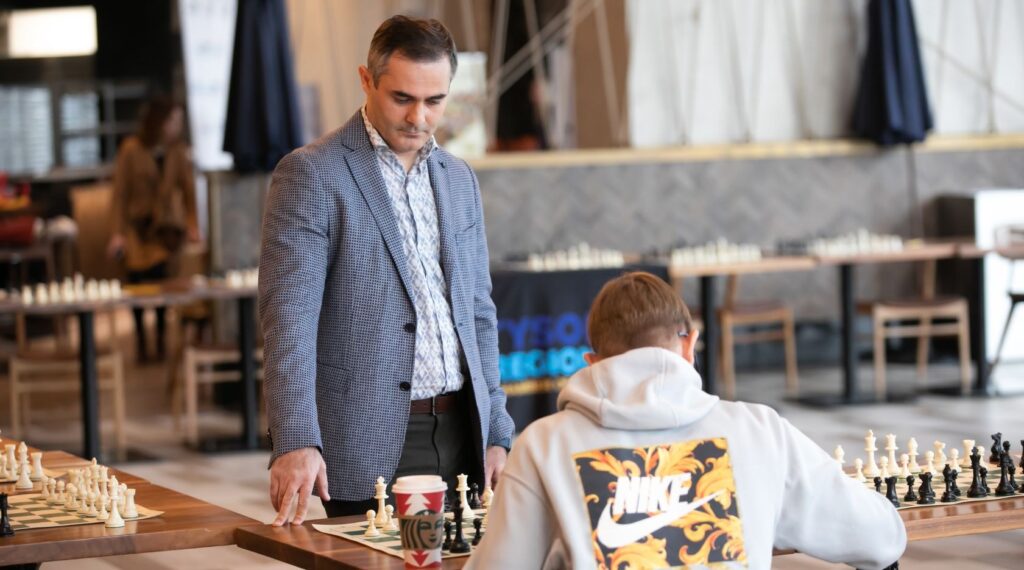
What Makes an Opening Good for Kids?
Before ranking openings, it helps to know what “good” even means for a young player. A useful junior opening usually has:
- Plans that are easy to explain in one or two sentences
- Natural, healthy piece development
- A clear path to king safety
- A fight for the center from the first few moves
- Regular chances to spot tactics
- Theory that does not require memorizing 15 moves deep
- Structures that repeat, so the child sees the same ideas again and again
- Middlegame positions a coach can actually teach from
The point is not to find an opening with no ideas behind it. Every opening has ideas. The goal is to pick one where those ideas are simple enough for a child to grasp early and rich enough to keep teaching them something as they improve. A student who understands why a move is played will find a good response when the opponent leaves the book. A student who only memorized the move usually will not.
Chess Opening Principles Every Kid Should Learn First
Specific openings mean little without the principles behind them. Coaches teach these before any named opening:
Control the center. Moves like e4 and d4 claim central squares directly, and pieces developed toward the center simply do more work than pieces stuck on the side.
Develop your pieces. Knights and bishops should come out early and land on useful squares. Moving the same piece two or three times in the opening usually wastes time the child needs elsewhere.
Castle early. King safety is not optional. Delaying castling to grab a pawn or push another pawn move is one of the most common reasons kids get attacked early.
Don’t move the queen too early. Bringing the queen out on move two or three feels active, but it usually gets chased around the board while the opponent develops for free.
Connect the rooks. Once minor pieces are out and the king is castled, rooks belong on open or half-open files where they support the rest of the plan.
Look for the opponent’s threat. Opening knowledge should never replace checking what the other side is doing on every move. A memorized line falls apart the moment a child stops asking this question.
Best Chess Openings for Kids
Italian Game
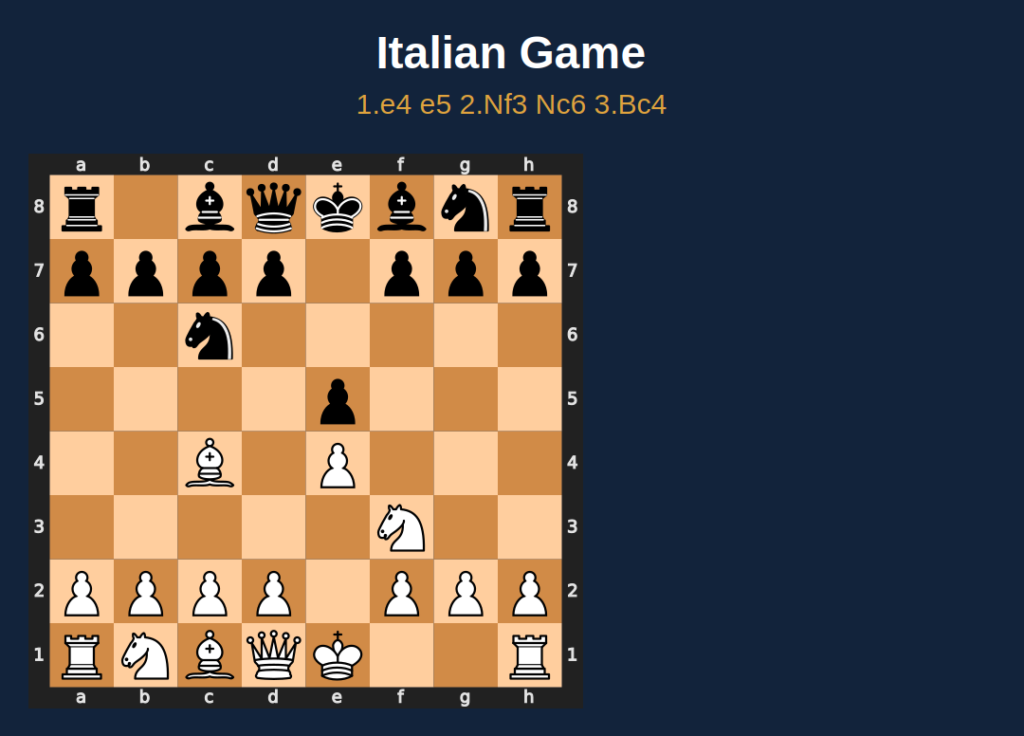
Best for: Beginner to intermediate players Main idea: Develop the knight and bishop quickly, aim the bishop at f7, and fight for the center with simple, natural moves. What kids learn: Fast development, central control, and basic attacking ideas against the f7 square. Advantages: Easy to understand, few forced lines to memorize, and it teaches piece activity from the first moves. Potential challenges: Black has several solid replies, so the child needs to understand plans rather than expect one fixed sequence every game. What to study: Basic development order, common tactical shots on f7, and a few model games showing typical middlegame plans.
Scotch Game
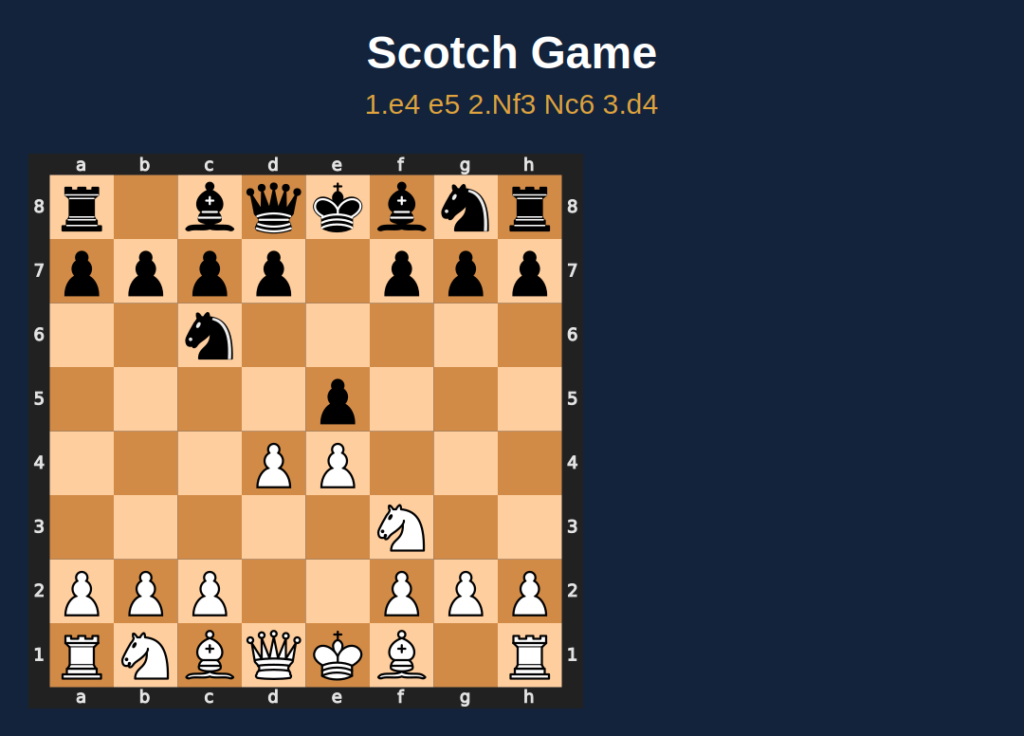
Best for: Beginner to intermediate players who enjoy open positions Main idea: Challenge the center immediately and open lines for quick piece activity. What kids learn: How to handle open positions, piece activity, and early tactical awareness. Advantages: Clear development themes and plenty of chances to practice tactics. Potential challenges: Positions can open up fast, so the child needs to be comfortable calculating a few moves ahead. What to study: The main pawn structures that result after the central exchange, and how to use the extra space.
Queen’s Gambit
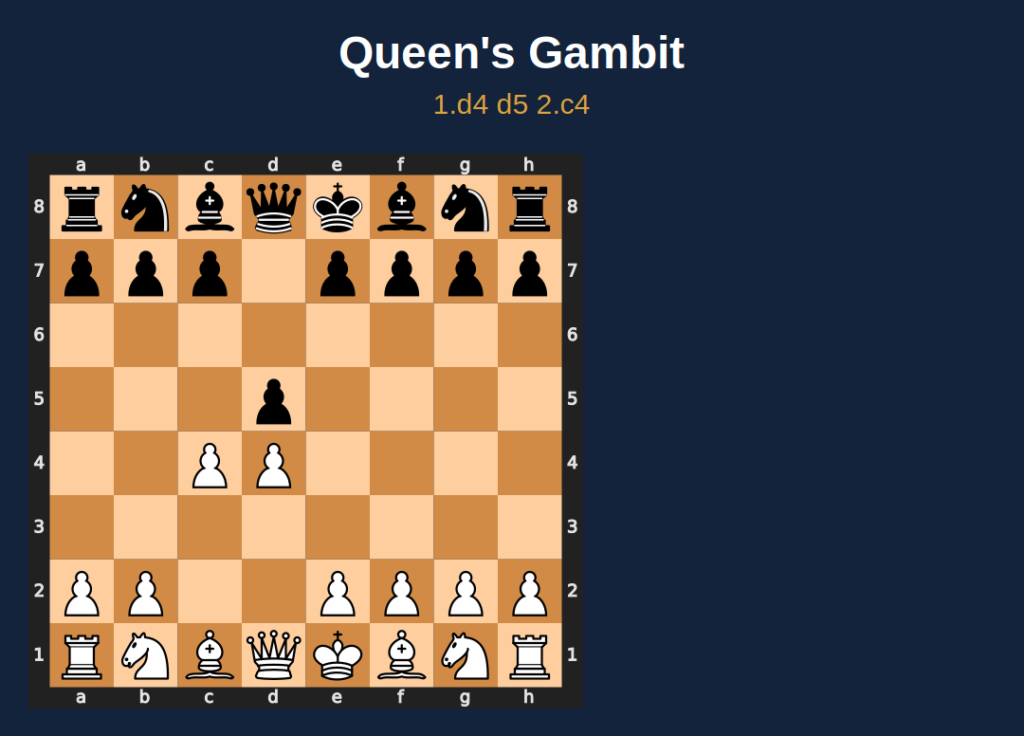
Best for: Players ready to think about pawn structure and planning Main idea: Offer a wing pawn to gain central control and space, then build a long-term plan around the resulting structure. What kids learn: Positional thinking, pawn structures, and how a small structural edge can grow over many moves. Advantages: Teaches strategic patience and connects naturally to middlegame planning. Potential challenges: Requires more patience than sharp tactical openings, which can be a harder sell for very young beginners. What to study: The main structures after Black declines or accepts the gambit, and how each one shapes the middlegame plan.
London System
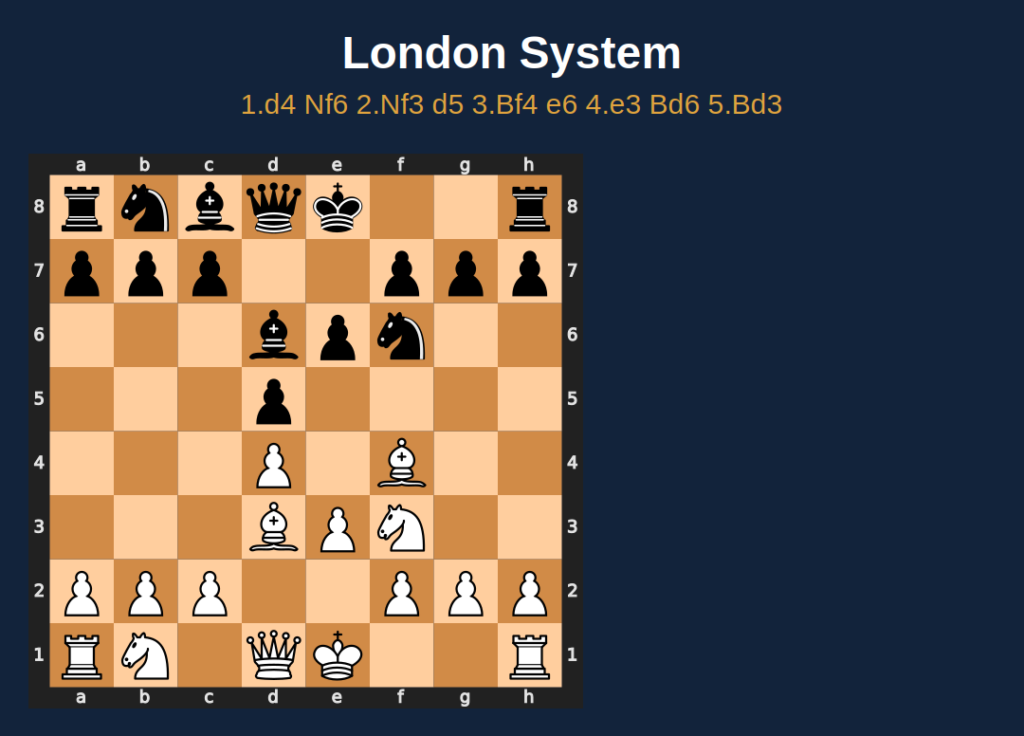
Best for: Players who want a consistent setup against most replies Main idea: Develop pieces to the same squares regardless of what Black plays, which reduces the amount of memorization needed. What kids learn: Development order and setup consistency. Advantages: Low theory burden and a repeatable plan that is easy for a coach to teach in a group setting. Potential challenges: It should not be treated as a “no-learning” opening. Players still need to understand the center, typical pawn breaks, piece placement, and what the opponent is trying to do. What to study: Standard piece placement, the timing of the c4 or e4 break, and how to react when Black plays actively in the center.
Vienna Game
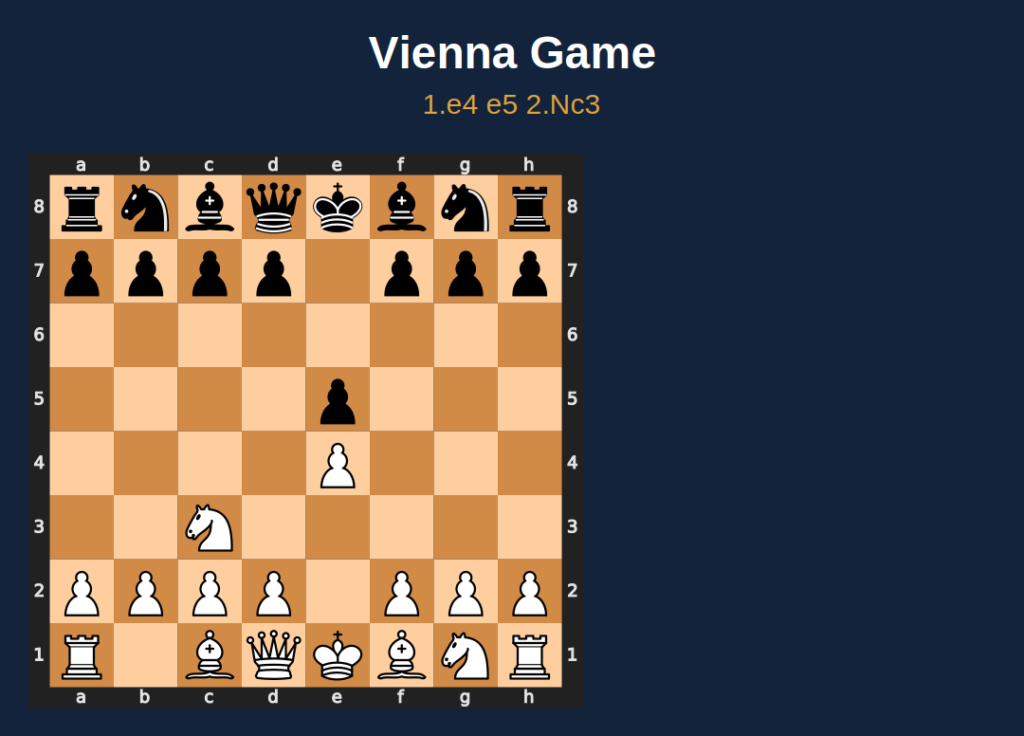
Best for: Players who enjoy active, attacking positions Main idea: Develop the knight to c3 before committing the center, keeping options open for an active setup. What kids learn: Piece activity, attacking ideas, and flexible development. Advantages: Attractive to young players who like sharp, active positions rather than quiet ones. Potential challenges: Some lines require more precise calculation than a beginner may be ready for. What to study: Typical attacking plans and a handful of model games rather than deep forced lines.
Best Chess Openings for Black Against 1.e4
Black cannot simply pick “the best” defense and use it forever. The right choice depends on the player’s level and style.
1…e5 leads to classical, well-understood positions with clear development and center play. This is often the natural starting point for beginners because the resulting positions overlap heavily with what they already learn on the White side.
Caro-Kann Defense – builds a solid pawn structure and gives Black a reliable, low-risk setup with clear strategic ideas. It suits players who prefer stability over immediate complications.
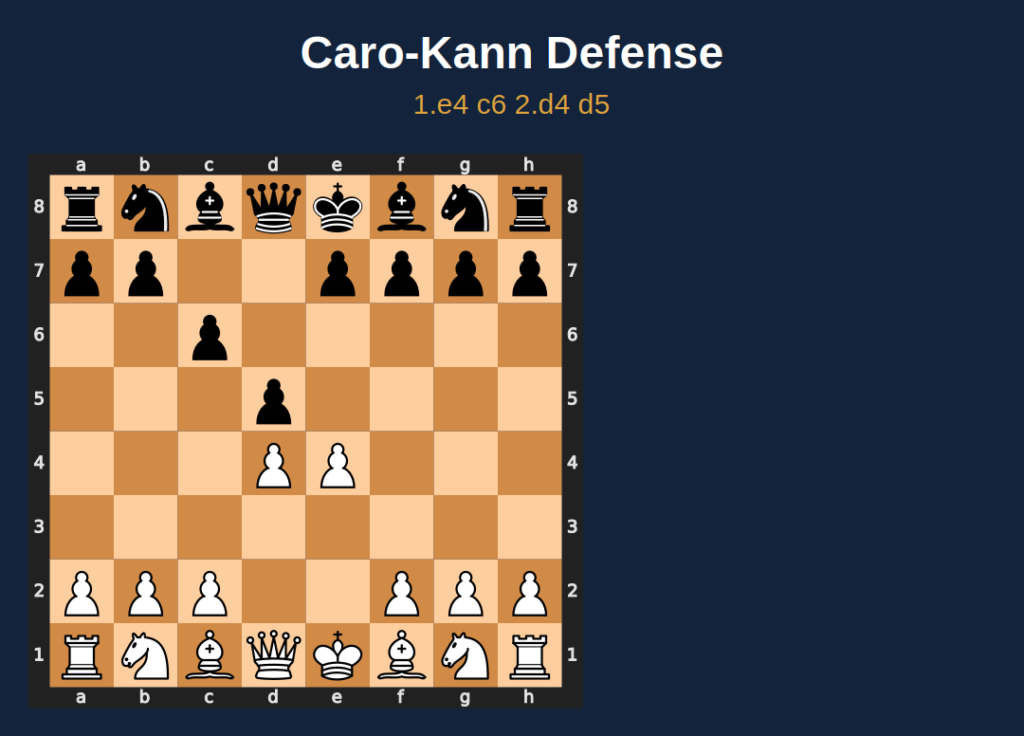
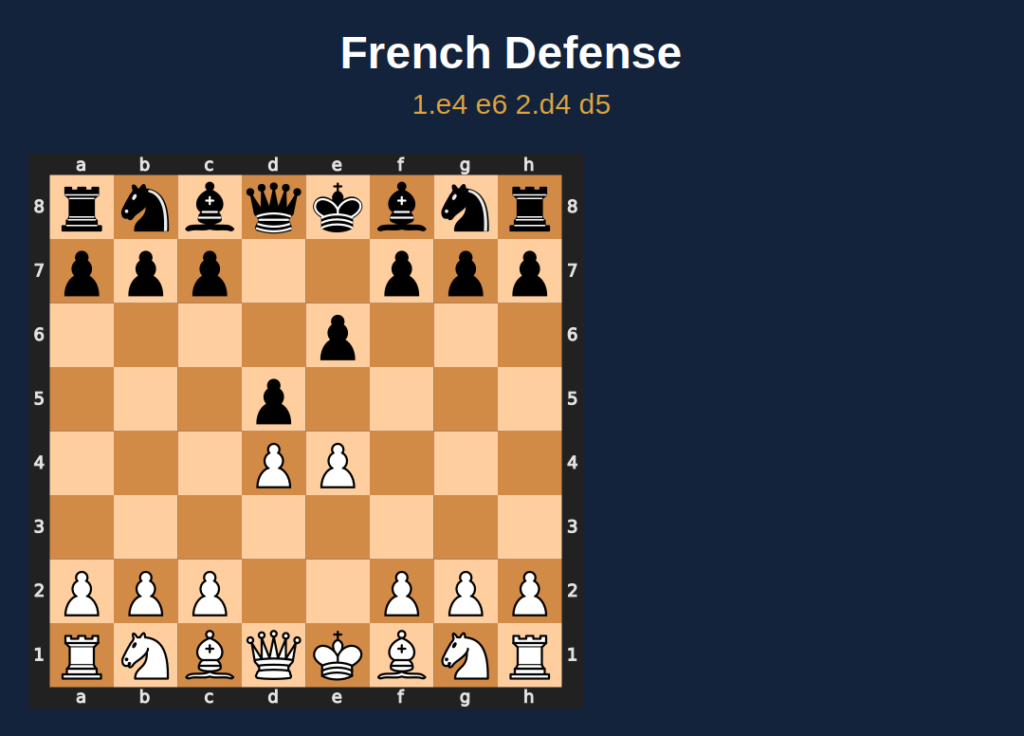
French Defense – creates a strong pawn chain and counterattacking chances later in the game, though the resulting positions can be strategically demanding for a young player to fully grasp.
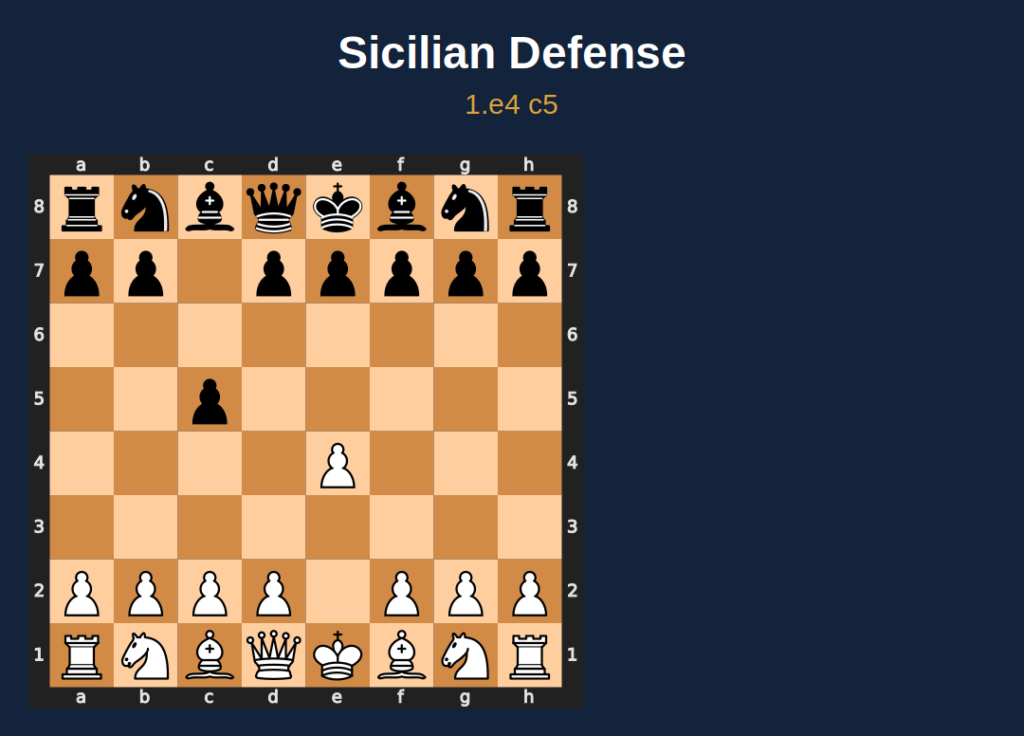
Sicilian Defense – produces dynamic, unbalanced positions with real counterplay, but it also comes with more theory than the other options here. It fits players who are ready for more complex preparation, not beginners picking it up because it looks aggressive.
Best Chess Openings for Black Against 1.d4
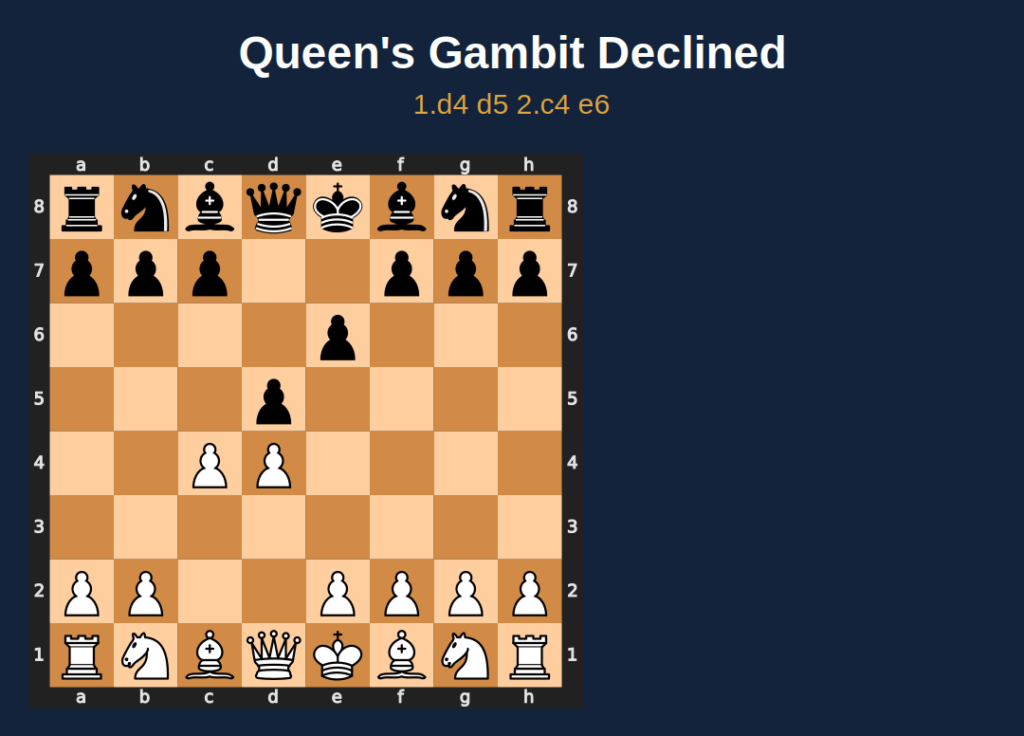
Queen’s Gambit Declined – keeps a solid center and leads to well-known strategic positions that connect naturally with what a child already studies on the White side of the Queen’s Gambit.
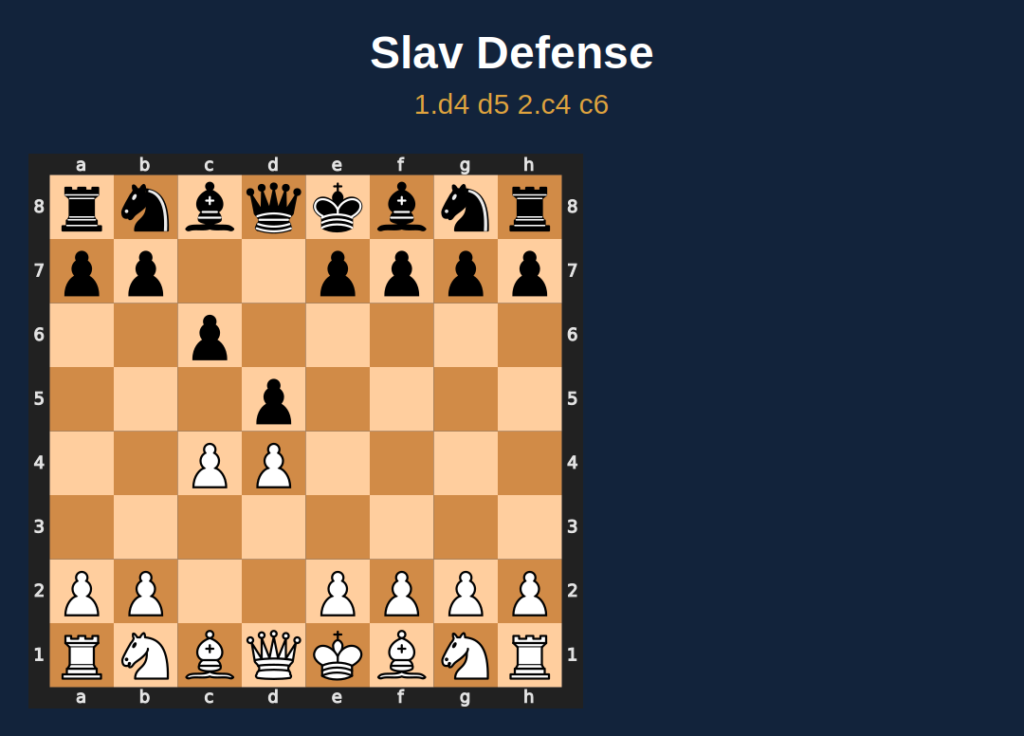
Slav Defense – offers a sturdy pawn structure with active piece play, and it is a common choice for players who want solidity without passivity.
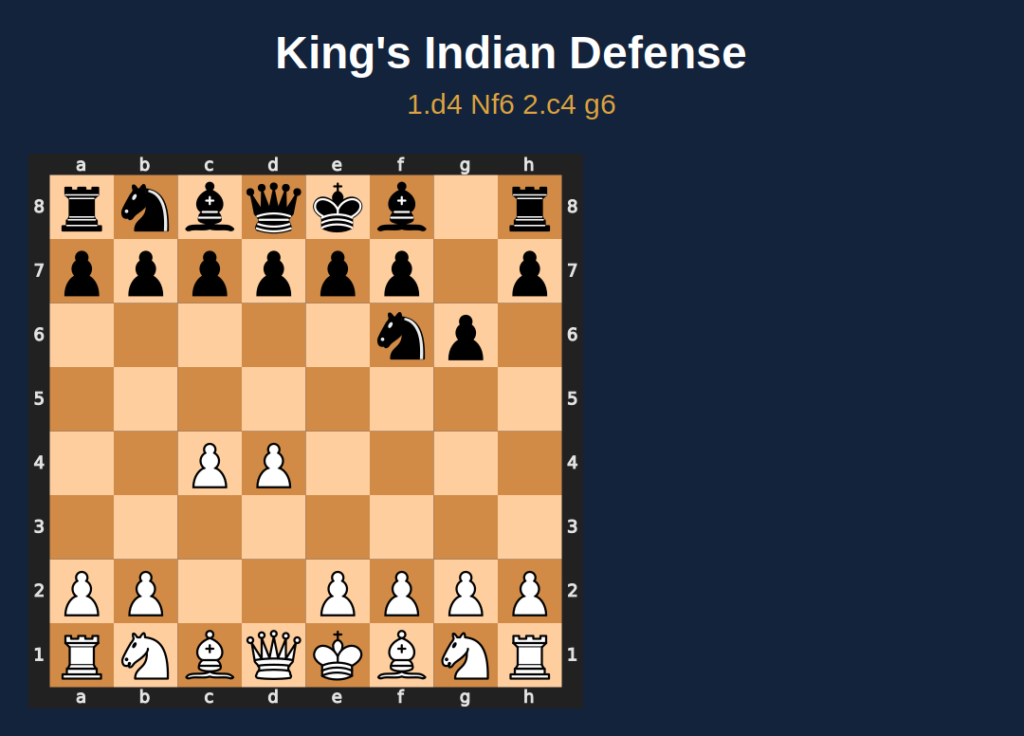
King’s Indian Defense – allows Black to give up some central space early in exchange for a sharp, attacking plan later. It suits players who are ready for more complex, imbalanced positions rather than absolute beginners.
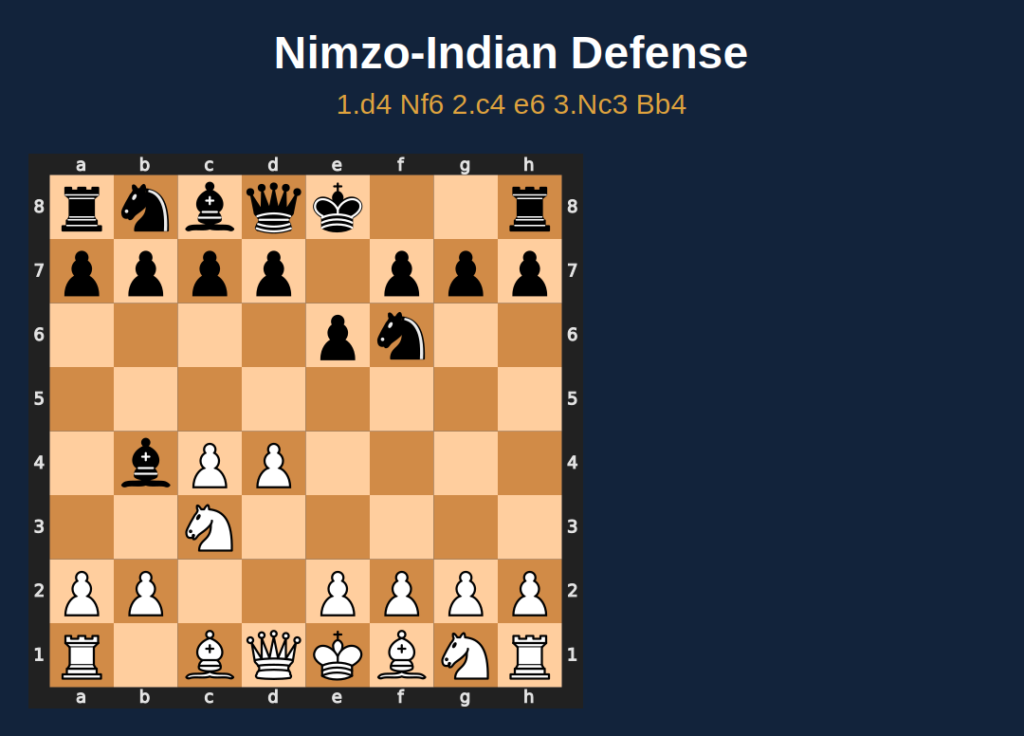
Nimzo-Indian Defense – is generally a better fit for more advanced intermediate players, since it asks the student to understand piece pressure and structural imbalances rather than simple development.
Best Openings for Intermediate Chess Players
This is where the questions change. A beginner asks, “What moves do I memorize?” An intermediate player should start asking, “What positions and plans do I actually understand?”
At this stage, a student can begin building a more consistent repertoire around:
- Understanding the typical pawn structures their openings produce
- Learning the standard plans for both sides in those structures
- Recognizing recurring tactical patterns tied to specific structures
- Studying model games from stronger players in the same lines
- Reviewing how common opponents at their level tend to respond
- Preparing specifically for known tournament opponents when possible
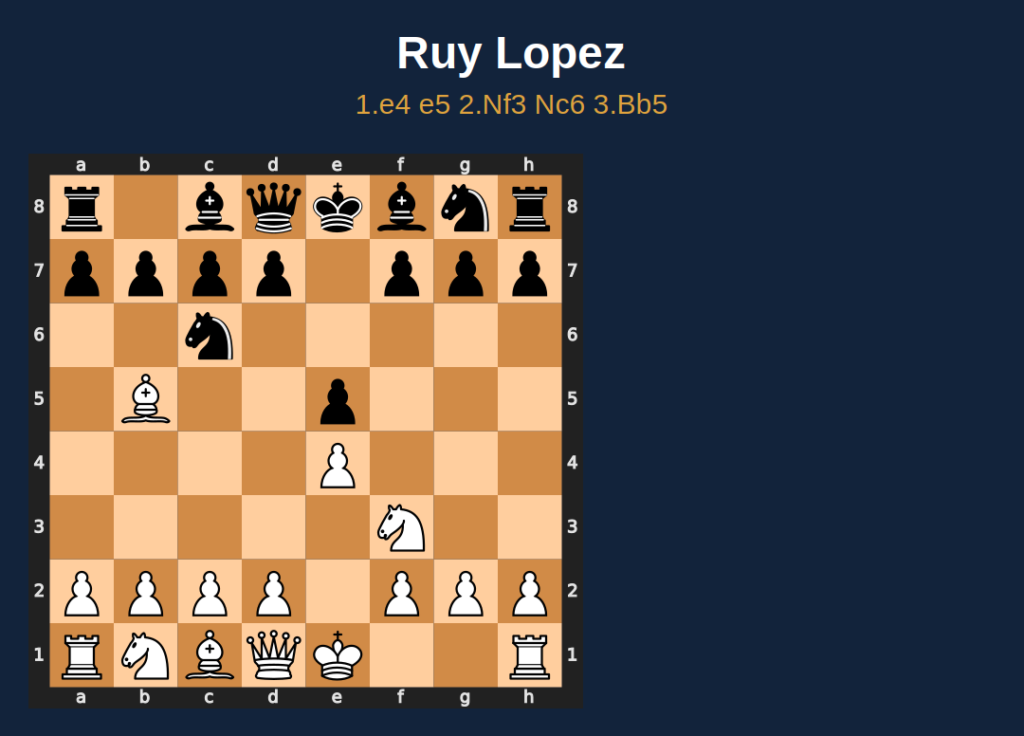
Reasonable options at this stage include the Italian Game, Scotch Game, Queen’s Gambit, London System, and Ruy Lopez for White, along with the Caro-Kann, French, Sicilian, or 1…e5 systems against 1.e4, and the Queen’s Gambit Declined, Slav, King’s Indian, or Nimzo-Indian against 1.d4. None of these is automatically “the best.” The best repertoire for an intermediate player is the one they understand well enough to use consistently under tournament pressure.
How Many Chess Openings Should a Kid Learn?
Fewer than most parents expect. A practical starting repertoire looks like this:
- One main opening system for White
- One main defense against 1.e4
- One main defense against 1.d4
That is enough to get through most games at the beginner and early intermediate stage. New variations and backup options can be added gradually as the player’s understanding deepens. The goal is depth of understanding in a small set of openings, not a long list of systems the child has only seen once.
How Much Time Should Kids Spend Studying Chess Openings?
A commonly cited training guideline suggests splitting study time roughly 20% on openings, 40% on the middlegame, and 40% on the endgame. It is worth being clear about what this actually is: a rule of thumb used by coaches and strong players, not an official rule from FIDE or US Chess.
The idea behind it is simple. Games below the master level are rarely lost because of opening mistakes. They are usually lost to missed tactics, weak middlegame decisions, or poor endgame technique. Spending most of a child’s limited study time memorizing opening lines takes time away from the areas that actually decide their games.
That said, the exact split should flex based on the player. Age, current rating, tournament goals, and individual weaknesses all matter. A young beginner may need an even simpler opening study routine, focused mostly on principles rather than lines. A junior tournament player heading into an important event might reasonably spend more time on specific opening preparation in the weeks before that tournament, then shift back to a broader balance afterward.
How Should a Junior Tournament Player Study an Opening?
A practical, repeatable process works better than trying to memorize a database.
Step 1: Learn the opening moves. Start with the basic sequence, nothing more.
Step 2: Understand the purpose of each move. For every move, ask what it develops, what square it controls, what the opponent might be threatening, and why this move is preferred over the alternatives.
Step 3: Learn the typical plans. Study the pawn breaks, piece placement, and attacking or defensive ideas tied to the resulting structure.
Step 4: Study model games. Use games from strong players and focus on the plans, not on copying someone else’s annotations word for word.
Step 5: Play the opening. Use slower, longer games to actually practice it under real conditions.
Step 6: Analyze your games. Look at where the memorized part of the opening ended, what the first real mistake was, whether a tactic was missed, and which type of position the player did not fully understand.
Step 7: Update the repertoire. Let the player’s own games decide what needs more study, rather than adding new lines just because they look interesting.
Opening Memorization vs. Opening Understanding
| Memorization | Understanding |
| Remembers moves | Understands plans |
| Struggles after an unfamiliar move | Adapts to new moves |
| Depends heavily on theory | Relies on principles |
| Often breaks down after move 10 | Still understands the position |
| Useful for short-term results | Builds long-term improvement |
Memorization has a role in tournament preparation. It should support understanding, not replace it. A player who has only memorized a line is stuck the moment the opponent plays something unexpected. A player who understands the ideas behind it can usually still find a reasonable move.
Common Opening Mistakes Kids Make
- Moving the queen out too early, which wastes time when it gets chased
- Moving the same piece repeatedly instead of developing new pieces
- Ignoring development in favor of pawn moves
- Delaying castling and leaving the king exposed
- Chasing opening traps instead of playing solid moves
- Memorizing lines without understanding the ideas behind them
- Playing too many different openings instead of building depth in one
- Ignoring what the opponent is actually threatening
- Spending too much overall study time on openings instead of tactics and endgames
- Choosing an opening only because a favorite player uses it
Each of these has a simple fix: slow down, ask what the move accomplishes, and check the opponent’s last move before deciding on the next one.
Should Kids Learn Opening Traps?
Traps have a place. They can be fun, and they teach real tactical patterns that show up again later in different contexts. The problem starts when a trap becomes the entire plan.
A child who only knows a trap and not the position behind it is in trouble the moment the opponent avoids it, which happens often once opponents get slightly stronger. The healthier approach is to learn a trap as one more tactical pattern to recognize, while still understanding the normal, non-trap version of the position just as well.
Coolest Chess Openings for Kids
“Coolest” is subjective, but a few openings consistently come up because of their sharp, attacking style:
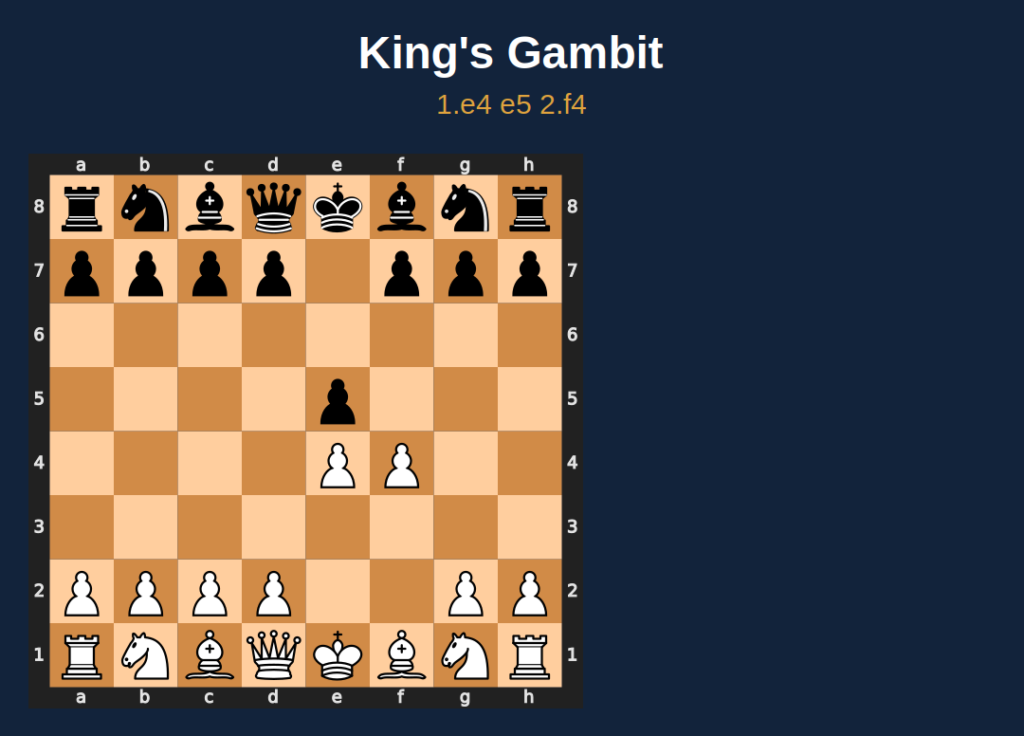
- King’s Gambit – an aggressive pawn sacrifice for fast development and attacking chances
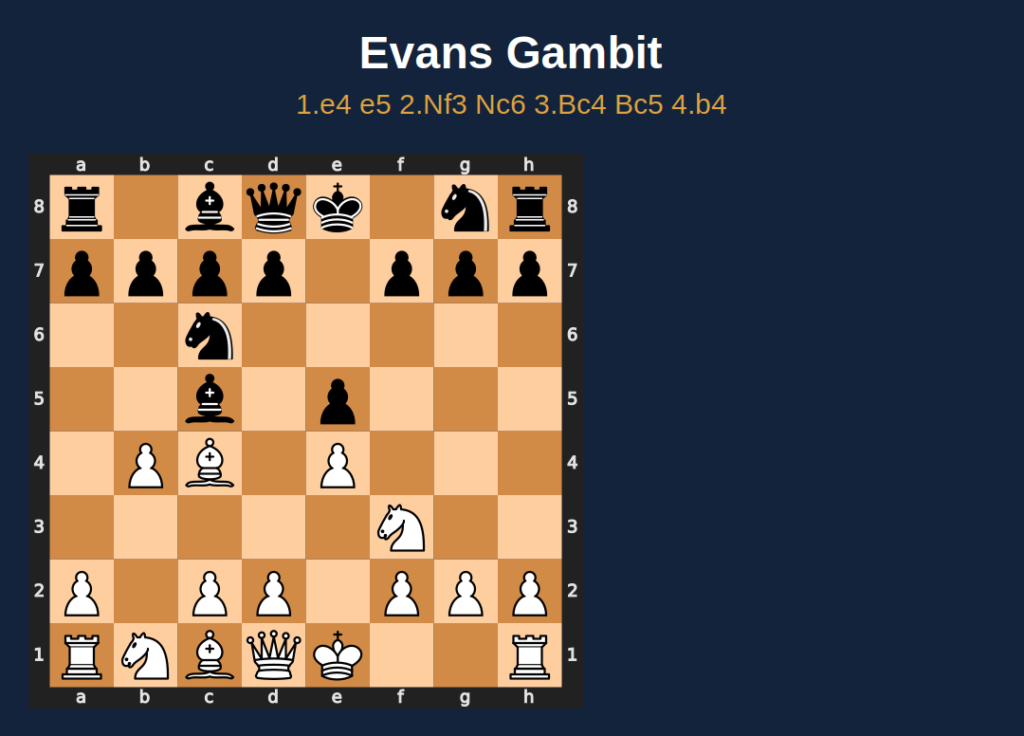
- Evans Gambit – another early sacrifice aimed at rapid piece activity against the king
- Vienna Gambit – sharp, tactical, and full of attacking ideas
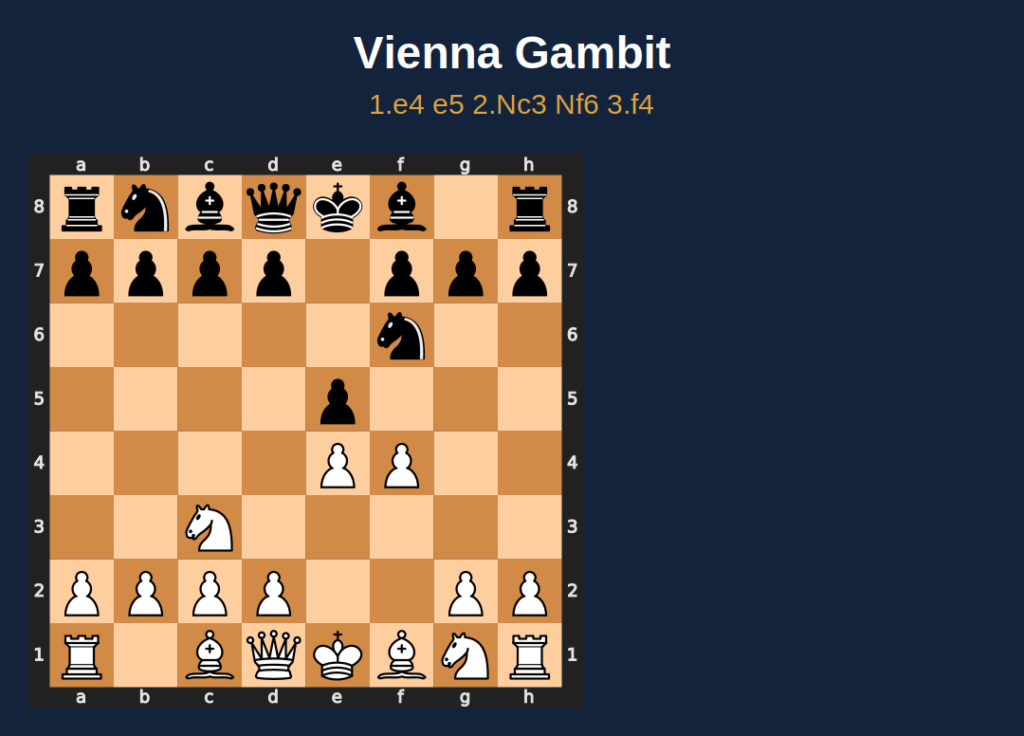
- Sicilian Dragon – dynamic and double-edged, with attacks on opposite sides of the board
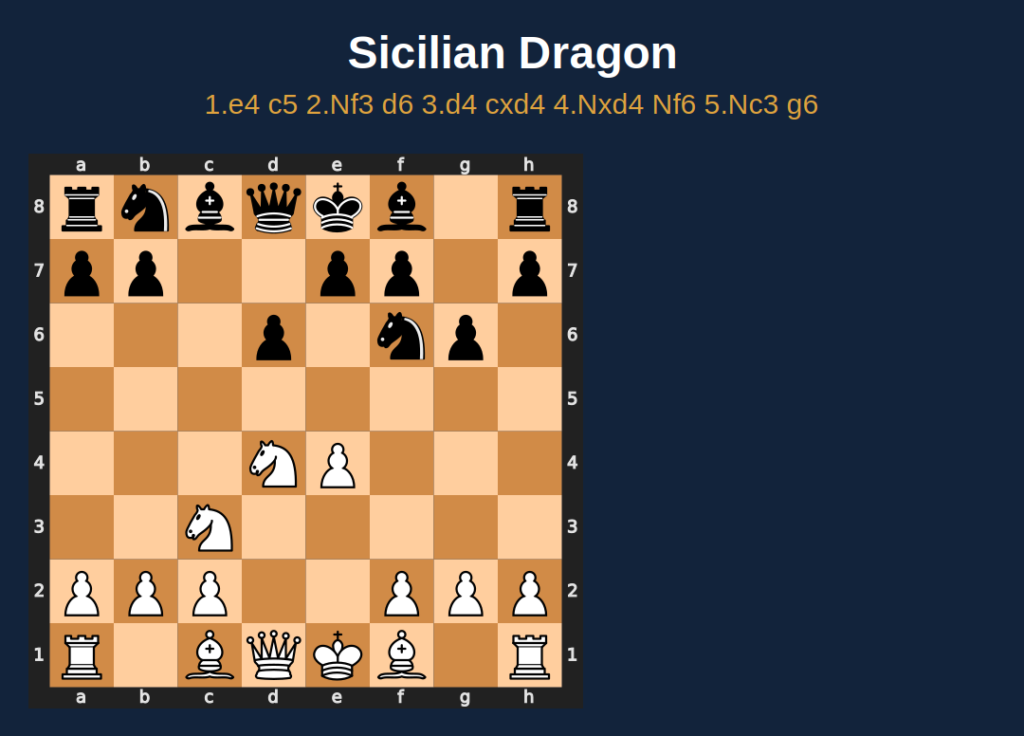
- King’s Indian Defense – a strategic pawn sacrifice of space now for a strong attack later
These openings are exciting because of the sacrifices, sharp positions, and fast attacking chances they create. That said, a flashy opening is not automatically a good choice for a specific child. It only helps if the player actually understands the resulting positions rather than hoping the opponent falls for the trick. In the end, the coolest opening for any player is usually the one whose positions they enjoy and genuinely understand.
How Opening Choice Changes With Chess Level
Beginner: opening principles, development, king safety, center control, and basic tactics.
Improving player: a main repertoire, typical plans, model games, and common tactical ideas tied to that repertoire.
Intermediate player: repertoire consistency, deeper plans, pawn structures, and preparation against common opponent choices.
Junior tournament player: specific variations, real tournament preparation, awareness of opponent tendencies, game analysis, and deeper tactical and strategic understanding.
Advanced player: repertoire refinement, engine analysis where it is genuinely useful, recent theoretical developments, and preparation for specific opponents and events.
Not every child needs to follow this timeline at the same pace. A coach adjusts the plan to the individual student rather than pushing everyone through the same schedule.
Opening Preparation Before a Junior Chess Tournament
Before a tournament, preparation should stay practical rather than turning into a last-minute scramble:
- Review the main repertoire, not new material
- Go over common responses from likely opponents
- Practice typical resulting positions, not just the first few moves
- Look over a few recent games in the same lines
- Review tactical patterns that show up in those structures
- Avoid learning an entirely new opening the night before
- Get enough sleep before game day
- Prepare mentally, not just theoretically
- Focus on playing good chess rather than trying to remember every variation
Practical Opening Checklist
Before learning a new opening, a player should be able to answer yes to most of these:
- Do I understand the basic opening principles?
- Do I know the main idea behind this opening?
- Do I understand where my pieces belong?
- Do I know the typical pawn breaks?
- Do I understand the king safety plan?
- Have I studied at least one model game?
- Have I played this opening myself?
- Have I analyzed my own games in it?
- Does this opening fit my playing style?
- Is this opening appropriate for my current level?
Don’t Memorize the Opening. Learn the Position.
A junior player should know more than the first 8 to 10 moves of an opening. They should understand why those moves are played, what plans come next, where the pieces belong, and what to do the moment the opponent leaves the opening book. That is the real goal of opening study at any level below master.
What Grandmaster Rashad Babaev Recommends for Junior Players
When choosing an opening repertoire for a junior player, GM Rashad Babaev believes the most important factor is the player’s individual style. There is no single opening system that is best for everyone.
Playing White
For players who have sharp tactical vision and enjoy active, attacking positions, GM Babaev usually recommends starting with 1.e4. It often leads to open positions where young players can develop their calculation, tactical awareness, initiative, and attacking skills.
For players who prefer slower, more positional chess, he may recommend 1.d4 or 1.Nf3, potentially transitioning into the Réti System. These openings can help develop a deeper understanding of pawn structures, maneuvering, positional planning, and long-term strategy.
Playing Black Against 1.e4
For active and aggressive players, the Sicilian Defense (1…c5) is one of his primary recommendations. 1…e5 is also an excellent choice, particularly for developing a strong understanding of classical chess and open positions.
Depending on the player’s style, the French Defense and Pirc Defense can also be interesting choices and lead to very different types of middlegame positions.
Playing Black Against 1.d4
Here again, GM Babaev believes the choice should depend on the player’s style.
The King’s Indian Defense can be an excellent choice for players who enjoy dynamic positions, counterattacking opportunities, and fighting for the initiative.
The Slav Defense is a strong alternative for players who prefer a more solid and positional approach with a reliable pawn structure.
GM Babaev’s General Philosophy
“I don’t believe junior players should simply memorize opening moves. The opening repertoire should fit the player’s natural strengths while also helping develop the areas of chess they need to improve. A good coach should first understand the student’s playing style, strengths, weaknesses, and tournament goals, and then build an opening repertoire around that individual player.”
— GM Rashad Babaev
FAQs
What are some good chess openings for kids?
Openings that teach clear principles and lead to understandable positions work best, such as the Italian Game, Scotch Game, and Queen’s Gambit for White, and the Caro-Kann or classical 1…e5 systems for Black.
What does the 20-40-40 rule mean in chess?
It is a training guideline suggesting roughly 20% of study time on openings, 40% on the middlegame, and 40% on the endgame. It is not an official FIDE or US Chess rule, and the right balance can shift based on the player’s level and goals.
What are the best openings for intermediate chess players?
There is no single best choice. Intermediate players benefit most from building consistency in one repertoire, such as the Italian Game or Queen’s Gambit for White and the Caro-Kann, French, or Queen’s Gambit Declined for Black, paired with real study of the resulting plans and structures.
What is the coolest chess opening?
This is subjective, but the King’s Gambit, Evans Gambit, and Sicilian Dragon are common picks because of their sharp, attacking style. The opening only stays fun once the player understands the positions it leads to.
How many chess openings should a child learn?
Usually just one for White, one against 1.e4, and one against 1.d4, with more added gradually as the player’s understanding grows.
Should kids memorize chess openings?
Some memorization helps, but it should support understanding rather than replace it. A player who only memorizes moves struggles the moment an opponent plays something unfamiliar.
What is the easiest chess opening for beginners?
The London System is often used for its low theory requirement and repeatable setup, though beginners should still learn the ideas behind it rather than treating it as a set of moves to play on autopilot.
Which openings are good for junior tournament players?
A consistent, well-understood repertoire matters more than any specific opening. The Italian Game, Queen’s Gambit, Caro-Kann, and Queen’s Gambit Declined are common starting points that scale well into more serious tournament preparation.
How much time should a child spend studying openings?
Less than most parents assume. Tactics, middlegame ideas, and endgame technique generally deserve more attention below the master level, with opening study increasing closer to important tournaments.
Should a child learn different openings for every tournament?
No. Switching openings constantly prevents real depth of understanding. It is better to build one solid repertoire and add to it gradually than to relearn something new before every event.
Final Thoughts
The best chess opening for a child is not a secret weapon or a trick that wins in ten moves. It is the opening that teaches good habits, fits the player’s current level, and leaves room to grow as their understanding deepens. Tactics, middlegame planning, and endgame technique still decide most games below the master level, so opening study works best as one part of a balanced training plan rather than the whole plan.
Looking for structured chess training? GMChessPrep offers Grandmaster-led coaching for players at every stage, from their first moves to advanced tournament preparation, through online group lessons, private lessons, and in-person classes. Find the right chess program to help your child build a repertoire that actually holds up at the board.
For official tournament and rating information, visit US Chess.
By Grandmaster Rashad Babaev | GMChessPrep Academy
