
Regular chess coaching helps children improve faster because they learn how to think during games instead of only memorizing moves. Chess lessons for kids also help young players build stronger fundamentals, improve focus, and prepare better for tournaments. However, not all coaching programs are the same. A structured training plan with proper guidance can make a big difference in long-term improvement and tournament performance.
Why Structured Chess Lessons Matter More Than Free Practice
Many children enjoy playing chess online or with friends, but after some time their improvement starts slowing down. Without proper guidance, kids often repeat the same mistakes without noticing them.
A structured chess lessons for kids program focuses on correcting mistakes and building stronger decision-making skills. A qualified coach identifies the specific weaknesses in your child’s game, whether it is opening knowledge, endgame technique, or decision-making during games and builds practice around improving those areas.
Students who follow structured weekly training at GMChessPrep achieve significant USCF rating improvement within their first year, often improving two to three times faster than those who practice on their own. The reason is simple: a coach sees what the child cannot.
What a Grandmaster-Backed Training Plan Actually Looks Like
Unlike casual chess clubs, GMChessPrep uses a curriculum-based system focusing on tactical pattern recognition, tournament psychology, and long-term positional understanding skills that recreational coaches simply cannot offer.
Here is what a well-designed program typically includes:
Opening Fundamentals: Children learn a small set of reliable openings suited to their style. Rather than memorizing dozens of lines, they learn the ideas behind each move — controlling the center, developing pieces quickly, and keeping the king safe.
Tactical Puzzles and Pattern Training: Daily puzzle practice builds the visual pattern recognition that helps kids spot forks, pins, skewers, and checkmate threats faster than their opponents.
Endgame Technique: A strong coach teaches king and pawn endings, basic rook endings, and how to convert winning positions into victories skills that directly translate to rating improvement.
Game Analysis and Review: After every tournament or practice game, students review their moves with a coach. Understanding why a move was wrong is more valuable than just knowing it was.
Tournament Preparation: For kids aiming at rated competitions, training includes time management, handling pressure, and studying opponents’ common patterns.
The Right Age to Start Chess Lessons for Kids
Children as young as five can begin learning chess fundamentals. At that age, the focus is on piece movement, basic rules, and making the game fun. Serious competitive training typically begins around ages seven to nine, when kids can focus for longer sessions and understand simple strategy.
Starting chess lessons for kids early gives children more time to build strong fundamentals and confidence. Chess improvement builds over time, and strong fundamentals learned early often make later progress easier.
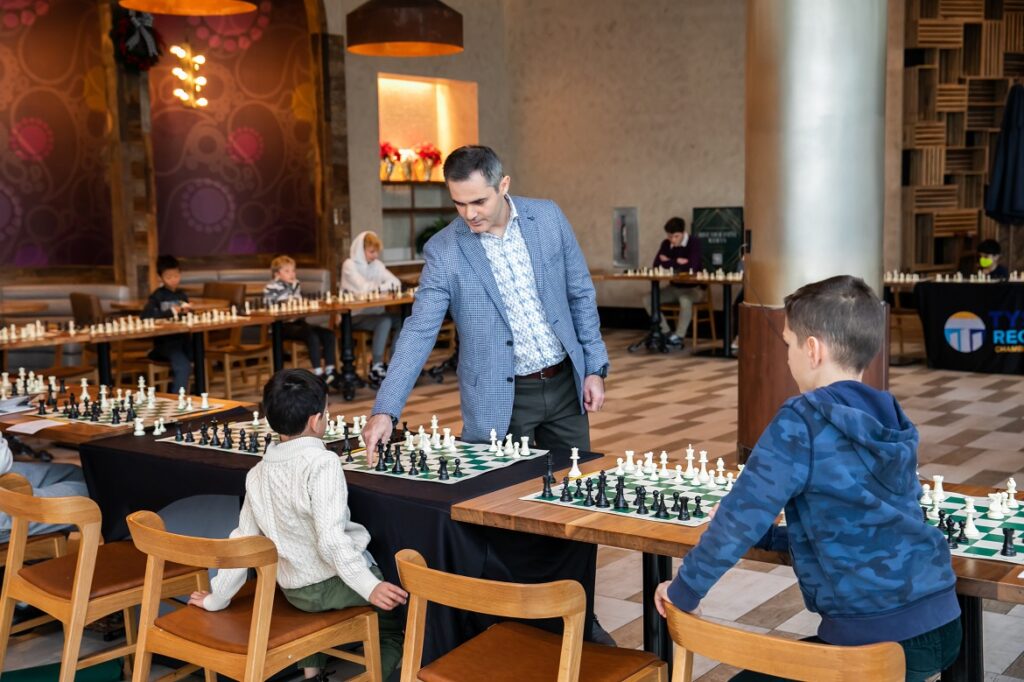
Group Lessons vs Private Lessons: Which Is Better for Your Child?
Both formats have real value, and the best training programs use a combination.
Group lessons help children learn by playing and discussing games with other students of similar ability. Group settings also make chess social and enjoyable, which keeps children motivated over the long term.
Private coaching gives students more direct feedback based on their individual playing style. A coach working individually with your child can target their exact weaknesses, answer questions in real time, and adjust the lesson based on how the session is going.
If you’re starting out, chess lessons for kids in group format are a great entry point. As children begin playing more tournaments, many families add private lessons for more focused improvement.
How to Choose the Right Chess Coach for Your Child
Here are the most important things to look for:
Competitive credentials: A coach who has played at the GM or IM level understands what serious competition demands.
Experience with children: Strong players are not always strong teachers. Look for coaches who know how to keep young students engaged and motivated.
Structured curriculum: Avoid coaches who simply play casual games with students. Ask for a clear plan covering openings, tactics, endgames, and tournament preparation.
Consistent feedback: Regular game analysis and progress updates help parents stay informed and help kids stay accountable.
At GMChessPrep, Grandmaster Rashad Babaev has worked with thousands of scholastic players across Northern Virginia and online since 2013. Unlike casual chess clubs, GMChessPrep uses a curriculum-based system focusing on tactical pattern recognition, tournament psychology, and long-term positional understanding. Every training program is built around these principles, with both in-person group lessons and online private coaching designed to help kids reach their goals faster.
4 Signs Your Child Is Ready to Level Up Their Chess Training
- They consistently win casual games against friends or family and are looking for a bigger challenge.
- They’ve played in at least one rated tournament and want to improve their USCF score.
- They watch chess videos or study games on their own, showing self-driven curiosity.
- They start asking questions about their mistakes and want to understand how stronger players think.
If any of these sound familiar, it’s time to move beyond casual play and into a structured coaching program.
Ready to Help Your Child Improve Faster?
With regular practice and proper coaching, many children become more confident players while also improving focus, patience, and decision-making skills.
GMChessPrep offers grandmaster-led chess lessons for kids in Northern Virginia and online, designed for beginners through serious tournament players. Families interested in structured chess coaching can learn more about available programs at GMChessPrep.
Frequently Asked Questions
At what age should my child start chess lessons?
Most children can begin learning the rules of chess as early as age five. Structured coaching with a focus on strategy and improvement is most effective starting around ages seven to nine. That said, children of any age can benefit from good instruction, it’s never too late to start.
How quickly can chess lessons improve my child’s rating?
Every child improves at their own pace, but chess lessons for kids with a qualified coach show real rating improvement within three to six months. Children who also play in regular tournaments tend to improve even faster because tournament experience helps them apply what they learn in lessons.
Are online chess lessons as effective as in-person coaching?
Yes, online lessons work very well when taught the right way. A coach can review your child’s games on a shared screen, explain moves in real time, and give homework between sessions. Many families actually prefer online coaching because it fits easily into a busy schedule. GMChessPrep offers both options so you can choose what works best for your family.
How do I know if a chess coach is right for my child?
A good coach listens to your child, explains things in a way they understand, and makes sessions enjoyable. Look for someone with real competitive experience, a clear teaching plan, and a history of working with young players. A short trial lesson is the easiest way to find out if the coach and your child are a good match.
