
Most chess players hit a point where their rating stops moving. They keep playing, keep losing the same type of positions, and cannot figure out why. This is usually not a talent problem. It is a coaching and structure problem. Grandmaster Rashad Babaev has spent decades working with students at every level, from complete beginners to tournament competitors, and has built a coaching system at GMChessPrep Academy that is designed around one goal: turning study time into real rating gains. Instead of generic tips or random puzzle practice, GM Babaev builds a personalized plan based on each student’s games, habits, and weaknesses. In this article, you will learn exactly how that coaching process works, what makes it different from casual online lessons, and what you can start applying today to move your own rating forward.
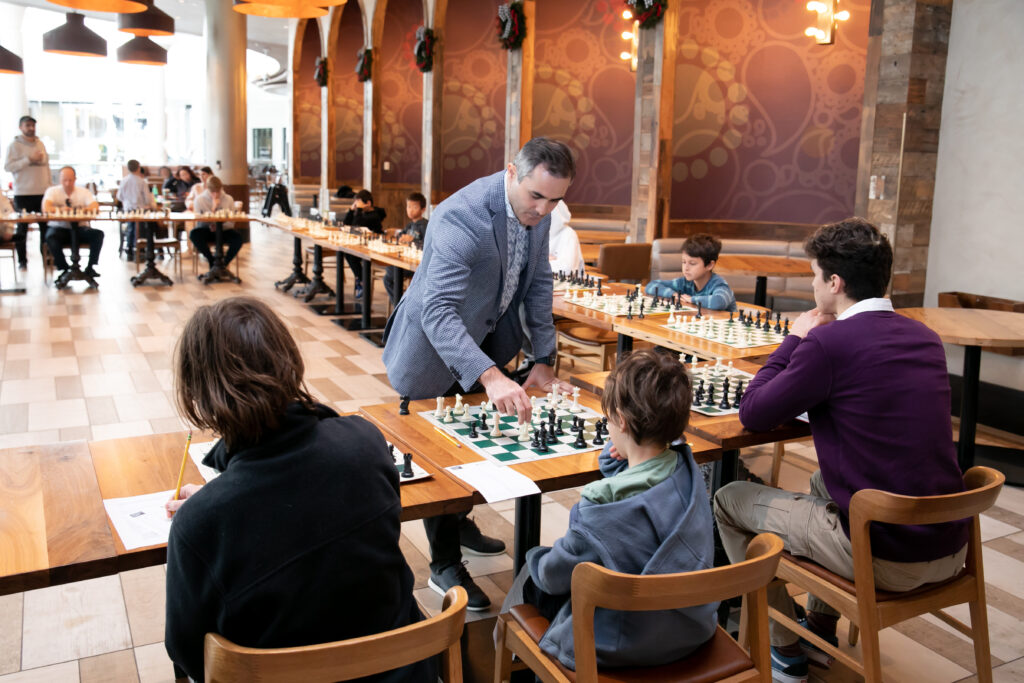
GM Rashad Babaev helps students raise their chess rating faster by combining personalized game analysis, a structured curriculum, tactical training, and real tournament experience. Instead of generic lessons, he builds a training plan around each student’s actual mistakes, then tracks progress over time through USCF-rated events.
Key Takeaways
- Rating growth speeds up when training is based on a student’s own games, not generic material.
- GM Babaev builds an individual improvement plan after reviewing a student’s playing history and rating band.
- Tactical pattern recognition is one of the fastest ways to gain rating points below the expert level.
- Structured lessons combined with regular tournament play produce faster, more stable rating growth than lessons alone.
- Common rating plateaus come from repeated opening mistakes, poor time management, and skipping post-game analysis.
- Students who train consistently with a coach tend to close knowledge gaps faster than students who study alone.
- GMChessPrep Academy offers online and in-person coaching paths so families can choose what fits their schedule.
What Makes GM Babaev’s Coaching Approach Different
A lot of chess instruction follows the same format. A coach shows a general opening idea or a famous tactic, and the student watches. This can be useful, but it does not target the specific reason a student is losing rating points.
GM Babaev’s approach starts from the other direction. He looks at what is actually happening in a student’s games. Are they losing on time? Missing simple tactics? Playing openings they do not understand? The lesson plan is built around the answer.
This is closer to how professional players train. A Grandmaster does not review random material before a tournament. They review their own games, their opponent’s patterns, and the specific ideas that matter for their next event. GM Babaev brings that same process into lessons for kids, adults, beginners, and competitive players.
Why a Structured Training Plan Matters More Than Random Practice
Rating growth is rarely about how many hours a student studies. It is about whether those hours target the right skills at the right time.
A student rated under 1000 typically gains rating faster from tactics and basic endgames than from deep opening theory. A student rated near 1600 often needs more work on strategic planning and calculation under time pressure. Applying the wrong type of study at the wrong stage wastes time and can even stall progress.
This is why GM Babaev structures lessons around clear stages rather than a fixed list of topics for everyone. Each student moves through material based on what their games show they are ready for, not based on age or how long they have played.
How GM Babaev Builds a Personalized Improvement Plan
Every student’s plan starts with the same first step: understanding where they actually are, not where they think they are.
- Game and rating review. GM Babaev looks at recent tournament games, common mistakes, and time usage patterns.
- Skill gap identification. He identifies whether the biggest opportunity is tactics, endgames, opening understanding, or calculation speed.
- Custom lesson sequencing. Lessons are ordered to fix the highest-impact gaps first, rather than following a generic curriculum.
- Practice assignments between lessons. Students get specific positions or puzzle sets tied directly to what was covered.
- Tournament feedback loop. After USCF-rated events, games are reviewed again and the plan is adjusted.
This cycle repeats throughout coaching, which is what keeps the plan relevant instead of static.
Core Training Methods Used in GMChessPrep Lessons
GM Babaev uses a mix of methods depending on the student’s level and goals.
- Tactical pattern training. Recognizing forks, pins, and combinations quickly is one of the fastest rating boosters at the club level.
- Annotated game review. Students walk through their own games with GM Babaev to understand not just what move was wrong, but why.
- Endgame fundamentals. Many rating points are lost in simple endgames that were never taught properly.
- Opening understanding over memorization. Students learn the ideas behind an opening so they can handle unfamiliar moves from opponents.
- Time management drills. Losing on the clock is one of the most common and most fixable rating leaks.
These methods are delivered through online private lessons, online group lessons, and in-person group lessons, so students can choose the format that fits their schedule and learning style.
Common Mistakes That Slow Down Rating Growth
| Mistake | Why It Hurts Rating | GM Babaev’s Fix |
|---|---|---|
| Skipping post-game analysis | Same mistakes repeat across tournaments | Structured review after every rated event |
| Memorizing openings without understanding | Falls apart against unfamiliar moves | Teaches ideas, not just move orders |
| Rushing critical positions | Leads to avoidable blunders | Time management drills in lessons |
| Studying random content online | Wastes hours on low-impact material | Personalized plan based on actual games |
| Avoiding tournament play | No real feedback on progress | Regular USCF-rated events built into the plan |
Fixing even two or three of these habits often produces a noticeable rating jump within a few months.
Tournament Preparation and Real Game Experience
Lessons alone are not enough to raise a rating. Ratings only change through rated games, so tournament experience matters just as much as the lessons leading up to it.
GM Babaev prepares students for USCF-rated tournaments by reviewing likely opponent styles, reinforcing time management habits, and setting realistic goals for each event. After tournaments, games are brought back into lessons so the student understands exactly what worked and what needs more work.
Students who want a more immersive experience often join a summer chess camp, where daily instruction is combined with practice games in a short, focused period. This format tends to work especially well for students trying to break through a specific rating barrier.
How Progress Is Tracked Over Time
A coaching plan only works if progress is measured, not assumed. GM Babaev tracks student development in a few concrete ways rather than relying on a general sense of improvement.
Rating trend, not single results. One bad tournament does not mean the plan is failing, and one great result does not mean a student has mastered a topic. GM Babaev looks at the trend across several events to judge whether the plan is working.
Recurring mistake tracking. If a student keeps losing the same type of position, that becomes the next lesson’s focus. This turns tournament losses into direct input for future training instead of something to move past quickly.
Skill checkpoints between stages. Before moving a student into more advanced material, such as deeper opening ideas or complex endgames, GM Babaev checks whether the fundamentals are solid. Moving too fast is one of the more common reasons students stall later at a higher level.
Parent and student check-ins. For younger students, GM Babaev communicates progress directly so families understand what is being worked on and why, rather than receiving vague updates about general improvement.
This tracking process is what allows the plan to change as the student changes, instead of running the same lessons regardless of results.
Who This Coaching Approach Works Best For
Personalized, game-based coaching tends to help almost any serious student, but it is worth understanding where it makes the biggest difference.
- Beginners building a foundation. Early lessons focus on rules, basic tactics, and simple endgames so students do not develop bad habits that are harder to fix later.
- Kids preparing for school and scholastic tournaments. Structured lessons combined with after school lessons give younger students consistent practice alongside their regular schoolwork.
- Adult improvers returning to the game. Adults often have more chess knowledge than they realize but lack structure, and a personalized plan can close gaps quickly.
- Competitive players stuck at a plateau. Students who have been stable at the same rating for a long stretch usually have one or two specific leaks that a fresh set of eyes can identify quickly.
Because coaching is based on the student’s actual games rather than their age or how long they have played, the same core process adapts naturally to all of these situations.
Expert Tips From GM Babaev for Faster Rating Growth
- Review every rated game within a day or two while the ideas are still fresh.
- Focus tactics practice on patterns you actually miss in your own games, not random puzzle packs.
- Play tournaments regularly. A rating built on very few games is unstable and slow to improve.
- Slow down in critical positions instead of playing on instinct under time pressure.
- Work with a coach who adjusts the plan based on your games, not a fixed one-size-fits-all course.
Frequently Asked Questions
How long does it usually take to see a rating improvement with a coach?
Most students see measurable progress within three to six months of consistent lessons and regular tournament play, though the exact timeline depends on starting rating, study habits, and how often the student competes.
Does GM Babaev coach adult beginners, not just kids?
Yes. GMChessPrep Academy works with students of all ages, from young beginners to adults picking up chess for the first time or returning after years away from the game.
Is online coaching as effective as in-person lessons for rating growth?
Both formats can produce strong results. The right choice depends on the student’s learning style, schedule, and whether they prefer working from home or in a classroom setting.
How often should a student play rated tournaments while training?
Most students benefit from playing every few weeks so there is enough fresh game data to review and adjust the training plan around.
What rating level benefits most from personalized coaching
Students at every level benefit, but personalized coaching often produces the fastest early gains for players between 400 and 1600, where common, fixable mistakes account for most lost rating points.
Can group lessons still be personalized?
Yes. GM Babaev structures group lessons around common skill levels and supplements them with individual feedback on each student’s games and practice assignments.
Do students need to already know chess notation before starting?
No. Beginners are taught notation and fundamentals as part of the early stages of their plan, so this is not a barrier to starting lessons.
How does GM Babaev decide what to teach first?
GM Babaev reviews a student’s recent games and rating history to spot the biggest gaps, whether that’s tactics, endgames, or time management, then builds the lesson sequence around fixing those gaps first before moving on to less urgent material.
Final Thoughts
A faster-growing chess rating is rarely about studying more. It is about studying the right things, in the right order, based on what your own games actually show. That is the core idea behind GM Rashad Babaev’s coaching approach at GMChessPrep Academy: personalized analysis, structured lessons, and real tournament feedback working together instead of separately.
According to US Chess, ratings are designed to reflect a player’s demonstrated performance over time, which is exactly why consistent, targeted training combined with regular rated play produces more reliable progress than study alone.
If you are ready to stop guessing what to study next, book a free consultation with GMChessPrep Academy and get a coaching plan built around your actual games.
