
Choosing how your child learns chess is just as important as choosing who teaches them. At GMChessPrep, parents often ask Grandmaster Rashad Babaev the same question during their free consultation: “Should my child take online lessons or in-person lessons?” The honest answer is that it depends on your child’s personality, schedule, and goals. Below, we break down both formats so you can make a confident, informed decision.
The Real Difference Between Online and In-Person Chess Lessons
Both formats teach the same core skills like tactics, strategy, endgames, and tournament preparation, but the learning experience is different. Online lessons rely on screen-sharing platforms and digital boards, while in-person lessons use a physical board, face-to-face feedback, and direct classroom energy.
Neither format is universally better. The right choice depends on how your child learns best.
Benefits of Online Chess Lessons
- Flexibility and Convenience
No driving, no fixed location, meaning your child can join a session from home, after school, or even while traveling. This is one of the biggest reasons busy families choose GMChessPrep’s online group and private lessons. - Access to a Grandmaster Coach, Regardless of Location
Online lessons remove geography as a barrier. A student in Texas or California can train directly under GM Rashad Babaev, the same coach who has guided students to National Master and International Master titles. This is something rarely possible with a local coach alone. - Recorded Lessons and Digital Tools
Online classes often use chess platforms that track progress, save games, and allow review after the session. This is incredibly helpful for parents who want to monitor improvement over time. - Comfortable Pace for Shy or Introverted Kids
Some children open up more easily in a one-on-one online setting than in a busy classroom, especially in private lessons.
Benefits of In-Person Chess Lessons
- Stronger Focus and Engagement
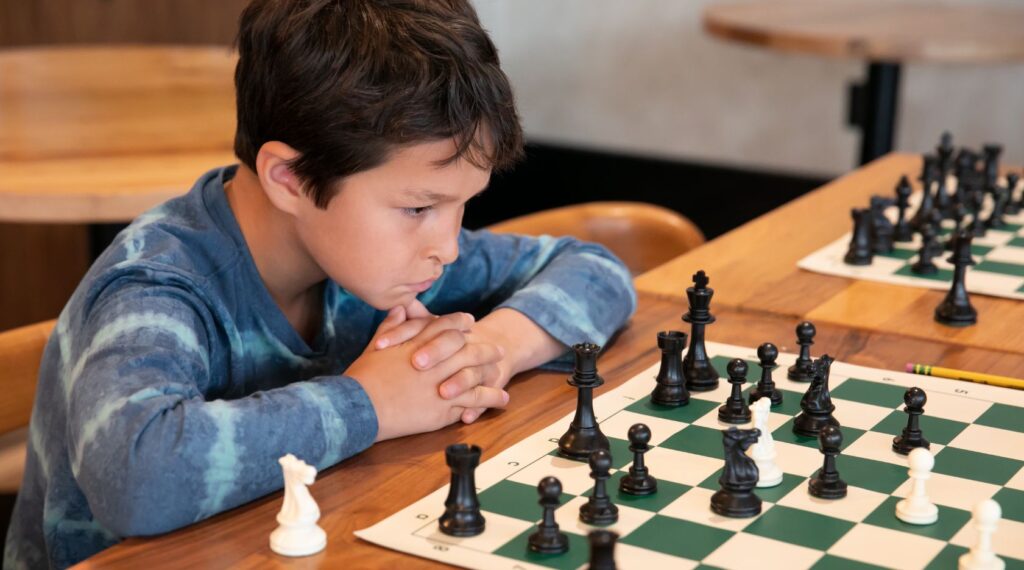
Sitting across a real board, away from screens and home distractions, helps many younger children concentrate better, especially those aged 5 to 9. - Social and Competitive Environment
In-person group lessons naturally build friendly rivalry, teamwork, and social skills. Kids see their peers thinking, calculating, and reacting in real time, which is something a screen cannot fully replicate. - Hands-On Coaching
A coach can physically demonstrate ideas on the board, point directly to pieces, and read body language to adjust the lesson pace instantly. This is especially valuable for complete beginners who are still learning piece movement and board awareness. - Tournament Like Atmosphere
In-person classes mimic the real environment of a tournament hall, providing useful preparation for kids planning to compete in USCF rated events.
How GM Rashad Babaev Decides What’s Best for Each Student
When evaluating a new student, Grandmaster Rashad Babaev doesn’t apply a one-size-fits-all rule. He looks at:
Age and Attention Span
Younger beginners often benefit from in-person structure, while older kids and teens often thrive with the flexibility of online lessons.
Current Chess Level
Beginners typically need more hands-on, physical board interaction. Intermediate and advanced players with a 1300-plus rating often progress just as fast online, since lessons shift toward calculation, opening prep, and game analysis.
Family Schedule
For families juggling school, sports, and other activities, online lessons remove the time lost to commuting.
Long-Term Goals
Students preparing seriously for national tournaments often benefit from a hybrid approach, using online lessons for regular training combined with in-person tournament participation.
This is exactly why GMChessPrep offers online private lessons, online group lessons, and in-person group lessons, letting every family choose the format that fits their child, not the other way around.
A Simple Way to Decide
So, Which Should You Choose?
Find the statement below that best describes your child:
My child is a complete beginner aged 5 to 8
In-person group lessons are ideal to build early focus and piece awareness.
We have a hectic schedule with school and sports
Online private or group lessons will give you the flexibility you need.
My child is quiet, introverted, or needs focused attention
Online private lessons offer a comfortable, distraction-free environment.
My child loves competing and interacting with peers
In-person group lessons will thrive on that social energy.
We live too far away from a physical chess academy
Online lessons with GM Rashad bring world-class training right to your screen.
My child is actively preparing for national tournaments
A hybrid approach (online training combined with in-person events) delivers the best results.
Final Thoughts
There’s no universally correct answer to online vs in-person chess lessons, only the right answer for your child.
What matters most isn’t the format, but the quality of coaching behind it. Whether your child joins GM Rashad Babaev’s online classes from home or attends an in-person session, they’re learning from the same Grandmaster-level curriculum that has helped students reach National Master and International Master titles.
If you’re still unsure, the easiest next step is a free 15-minute consultation, where GM Rashad personally helps assess your child’s level and recommends the best starting format.
Frequently Asked Questions
Are online chess lessons as effective as in-person lessons?
Yes, when taught by a qualified coach using structured curriculum and digital boards. Many GMChessPrep students who train online have reached National Master and International Master level, proving the format works when the coaching quality is high.
What age is best suited for in-person chess lessons?
Children aged 5 to 9 often benefit most from in-person lessons, since hands-on board interaction and a structured classroom help build early focus and piece awareness.
Can my child switch between online and in-person lessons later?
Yes. Many families start with online lessons for flexibility and later add in-person group classes or tournaments once their child is ready for a more competitive, social environment.
Do online private lessons work for complete beginners?
Yes, especially one-on-one lessons, where the coach can give full attention and adjust the pace to the child’s comfort level, even without a physical board in front of them.
Which format is better for tournament preparation?
A hybrid approach works best, utilizing consistent online lessons for calculation and opening preparation, combined with in-person tournaments for real competitive experience.
How do I know which format is right for my child?
The best way is a short consultation. GM Rashad Babaev personally evaluates each student’s age, experience, and goals before recommending online, in-person, or a combination of both.
